The doctor read the first line twice.
Not because it was difficult.
Because it was impossible.
At least, it should have been.
His lips parted, then closed again, as though the words themselves had weight and he was deciding whether his mouth was strong enough to carry them.
Martin did not move.
That was how I knew.
Not by his anger. Not by his denial. Not by the sharp command he had thrown into the room only moments earlier.
I knew because he stopped performing.
For nine years, Martin Voss had always performed.
The devoted husband.
The wounded man.
The generous patron.
The visionary heir.
The betrayed victim.
Even cruelty, with him, had been staged beautifully.
But now his face had emptied into something raw and almost unrecognizable.
Fear.
The doctor looked down again at the screen.
“The preliminary DNA comparison,” he said slowly, “indicates that the infant is not biologically related to Mr. Voss.”
I did not blink.
I had known that much.
Or thought I had.
Martin was infertile. Clara’s child could not be his. That was the lie I had walked into the clinic to expose.
But the doctor was not finished.
His hand tightened around the phone.
“The report also states…” He stopped.
Martin opened his eyes.
“Don’t.”
The word was barely a whisper.
Not a threat.
A plea.
And that frightened me more than all his threats ever had.
The doctor looked at me.
“The child shares a biological relationship with you, Mrs. Voss.”
The world did not shatter loudly.
It folded.
Quietly.
Neatly.
Like a letter placed back into an envelope.
For a moment, the room disappeared.
The cream walls.
The polished desk.
The medical degrees in thin black frames.
Martin standing there with deathly still eyes.
All of it slid away, and I was back in another room five years earlier, lying beneath white lights, listening to a woman with a soft voice explain what had been lost.
The child I had wanted.
The child Martin had called an inconvenience.
The child I had mourned alone because my husband had a board meeting and his mother had said grief was unbecoming in public.
My breath left me.
“No,” I said.
The doctor stepped toward me.
“Mrs. Voss—”
“No.”
It was not denial.
It was refusal.
There are truths the mind rejects not because they are false, but because accepting them would tear through too much flesh.
Martin spoke then.
“Evelyn.”
I turned to him.
He said my name as though he still had the right to use it gently.
As though softness could cover what horror had already begun to rise between us.
“What did you do?” I asked.
His jaw worked once.
Nothing came out.
The doctor’s voice remained careful.
“This is only a preliminary notification from the external lab. Full documentation will follow, but based on the markers tested—”
“Markers?” I repeated.
My hands were cold.
Not trembling.
Cold.
“What does that mean?”
“It means the baby appears to be genetically connected to you.”
“How?”
The question filled the room.
The doctor did not answer.
Martin did.
“Evelyn, we need to leave.”
I laughed.
It was small and strange and did not sound like me.
“That is your answer to everything, isn’t it? Leave the room. Close the door. Bury the witness.”
He took a step toward me.
I stepped back.
He noticed.
So did I.
For years, I had mistaken endurance for loyalty. I had allowed him to reduce my world inch by inch until even my fear had furniture in it. It sat beside me at breakfast. It dressed with me for galas. It slept between us in a bed too large for a marriage so small.
But this was not fear.
This was something sharper.
A blade waking up.
“Doctor,” I said, keeping my eyes on Martin, “is there any legal explanation for that result?”
The doctor hesitated.
“A biological connection of this type would typically require genetic material from you.”
Genetic material.
Such a clean phrase.
So clinical.
So polite.
It did not sound like theft.
It did not sound like betrayal carried out under anesthesia.
It did not sound like my body had been treated as a vault someone had opened while I slept.
My knees weakened, but I did not sit.
I would not give Martin the satisfaction of seeing me collapse.
“When?” I asked him.
His face hardened.
There it was.
The door closing again.
“You’re emotional.”
The old phrase.
The old cage.
I smiled.
“You always say that when I get too close to the truth.”
“You have no idea what you’re accusing me of.”
“Yes,” I said. “I do.”
The doctor placed the phone on the desk very carefully.
“Mrs. Voss, I strongly recommend you consult an attorney before discussing this further.”
Martin turned on him.
“You will not interfere in my family.”
The doctor’s expression changed.
Not dramatically.
Just enough.
Until that moment, he had been a physician trapped inside someone else’s private catastrophe. But Martin had made one mistake. He had spoken like a man who owned the room.
The doctor no longer looked cautious.
He looked offended.
“Mr. Voss,” he said, “if there has been any unauthorized use of reproductive material, this is no longer merely a family matter.”
Martin’s mouth tightened.
“Choose your next words carefully.”
“I already did.”
Silence returned.
But it was different now.
The first silence had been shock.
This one was alignment.
The room had shifted, and Martin could feel it. He was used to power moving toward him, bending around him, arranging itself at his feet.
But now power had found another direction.
Me.
The doctor.
The paper.
The laboratory.
The truth.
I reached for my handbag and took out my phone.
Martin’s eyes dropped to it.
“Who are you calling?”
“My attorney.”
“You don’t have an attorney.”
I looked up.
“That is what you were supposed to think.”
For a second, I saw the impact.
A tiny fracture across the surface of him.
His wife, the ornament, had prepared.
His wife, the quiet one, had copied files.
His wife, the woman he had humiliated beneath crystal chandeliers, had not simply endured.
She had waited.
I unlocked the phone and pressed one contact.
The call connected on the second ring.
“Evelyn?” said a woman’s voice.
“Margot,” I said. “I need you at Dr. Feld’s office. Now.”
Martin’s eyes narrowed.
Margot Hale had once been the youngest partner at the firm that protected half the city’s rich men from consequences. Then she left, and no one ever explained why. I knew why.
She had seen too much.
She had kept receipts.
And six months ago, after Martin introduced Clara’s pregnancy as a miracle, I had found her name in an old article about medical fraud settlements.
“Is he there?” Margot asked.
“Yes.”
“Do not leave with him. Do not surrender your phone. Do not sign anything. I’m on my way.”
Martin heard enough.
He moved suddenly.
Not toward me.
Toward the door.
The doctor stepped aside, but not quickly enough for Martin’s temper.
“You are finished,” Martin said to him.
The doctor did not flinch.
“You should wait for counsel.”
Martin smiled then.
A terrible, quiet smile.
“I am counsel.”
And he left.
The door closed behind him with a softness that felt more violent than a slam.
For three seconds, no one spoke.
Then I exhaled.
The doctor crossed to the door and locked it.
The sound of the bolt sliding into place made my stomach turn.
“I am sorry,” he said.
I looked at the locked door.
“For what?”
“For not asking more questions five years ago.”
My head turned slowly.
He looked older now.
Not professionally composed.
Haunted.
“What do you mean?”
He sat down behind the desk, but he did not lean back. “Your fertility treatment records were transferred through this clinic’s network. I was not your primary physician then, but I reviewed part of your file during the audit.”
“What audit?”
His face tightened.
“The one that was quietly discontinued.”
The room seemed to darken.
“There was an audit?”
“After a storage irregularity at the cryobank.”
My mouth went dry.
“Storage irregularity.”
Again, the polite language.
The clean linen draped over a corpse.
He lowered his voice. “Several samples were moved without proper authorization. The paperwork was later corrected.”
“Corrected by whom?”
He did not answer.
He did not have to.
Patricia Voss had been on the hospital board for twelve years.
Patricia Voss funded the east wing.
Patricia Voss knew which doors opened with money and which opened with fear.
I thought of her face at the gala.
Her diamond collar.
Her dry hand gripping my wrist while Clara stood in ivory silk, glowing beside Martin with another woman’s child in her arms.
“You will not embarrass this family,” Patricia had whispered to me that night.
Not because she feared scandal.
Because she had arranged it.
My phone vibrated.
A message from Margot.
Twenty minutes.
Then another message appeared.
Unknown number.
No words.
Just a photograph.
I opened it.
For a moment, I did not understand what I was seeing.
It was a nursery.
Cream walls.
Gold-trimmed crib.
A mobile of tiny silver stars.
Then I saw the woman reflected in the mirror above the dresser.
Clara.
Her hair pulled back.
Her face pale.
Her eyes fixed on the phone she was holding.
Below the photograph, a message appeared.
I didn’t know it was yours.
My chest tightened.
The doctor noticed.
“What is it?”
I turned the screen toward him.
He read it and went still.
Another message came.
He said it was his only chance.
Then another.
Patricia said you had already lost everything.
The air left the room.
I stared at those words until they blurred.
You had already lost everything.
Of all the cruelties, that one found the deepest place.
Because grief had been used as permission.
My pain had become paperwork.
My loss had become an opportunity.
I typed with fingers that no longer felt like mine.
Where are you?
The answer came quickly.
Voss House.
Then:
Please don’t come alone.
I looked at the doctor.
“I need to leave.”
“Your lawyer said not to.”
“My child is in that house.”
The word came out before I could stop it.
My child.
The doctor’s face softened with something that almost broke me.
“We do not know the full circumstances yet.”
“I know enough.”
He nodded once.
“Then you still should not go alone.”
Before I could answer, a sharp sound came from outside the door.
Voices.
One low.
One familiar.
Martin.
Then another voice.
Older.
Colder.
Patricia.
The doctor looked toward the hallway.
“They’re here.”
Of course she was.
Patricia Voss did not arrive after disasters.
She arrived before the police could be called.
A knock came.
Not urgent.
Not polite.
Certain.
“Dr. Feld,” Patricia said through the door. “Open this immediately.”
The doctor did not move.
“Mrs. Voss is in consultation.”
“That woman is my daughter-in-law.”
“That woman is my patient.”
A pause.
Then Patricia laughed softly.
“Doctor, do not confuse your medical license with armor.”
I walked to the door before the doctor could stop me.
“Evelyn,” he warned.
I unlocked it.
The door opened.
Patricia Voss stood in the corridor wearing winter white, though it was not winter. She always dressed like she was attending the funeral of someone she had outlived.
Martin stood behind her.
Two clinic administrators hovered farther down the hallway, faces pale, already calculating liability.
Patricia looked past me into the room.
Then at my handbag.
Then at my face.
“You have made enough spectacle for one day.”
I leaned against the doorframe.
“I thought you liked spectacle. You arranged such a beautiful one at the gala.”
Her eyes sharpened.
Martin said nothing.
He was letting his mother enter first.
Of course he was.
Men like Martin often mistook inherited cruelty for strategy.
Patricia lowered her voice.
“You are upset. Understandably. You were never strong around children.”
The blow landed.
She knew it would.
But I did not step back.
“No,” I said. “I was never weak around them either. That must have disappointed you.”
Her smile faded.
“Be careful, Evelyn.”
“Everyone keeps saying that today.”
“Because you have wandered into matters you cannot possibly understand.”
“I understand someone used my genetic material without my consent.”
The administrators looked at one another.
Patricia’s expression did not change.
Only her eyes moved, briefly, toward the doctor.
There it was.
Not surprise.
Assessment.
How much had he heard?
How much could he prove?
How quickly could he be removed?
I had seen Martin make that face.
Now I knew where he learned it.
Patricia stepped closer.
“Lower your voice.”
“No.”
The word came easier this time.
Martin’s head lifted.
Patricia studied me.
For the first time, I saw her reassessing not the situation, but me.
That gave me more satisfaction than rage ever could.
“You think this child saves you?” she asked softly.
I stared at her.
“Saves me?”
“Women like you always need something to hold. A husband. A tragedy. A child.” Her smile returned, thin as wire. “It is pathetic.”
Behind her, Martin closed his eyes.
Not from shame.
From impatience.
His mother was enjoying herself, and he needed control back.
“Enough,” he said.
Patricia ignored him.
“That baby belongs to the Voss family.”
The hallway went utterly still.
Even the administrators seemed to stop breathing.
I said, “Thank you.”
Her eyes narrowed.
“For what?”
“For saying it where witnesses can hear.”
For the first time in nine years, Patricia Voss looked at me as though I had struck her.
Not with my hand.
With competence.
A voice called from behind them.
“Mrs. Voss?”
Margot Hale walked down the corridor in a charcoal suit, carrying no briefcase, no file, nothing but a phone and the expression of a woman who had been waiting years to ruin someone elegantly.
Patricia turned.
The recognition was instant.
So was the hatred.
“Margot,” she said.
“Patricia.”
No titles.
No warmth.
No fear.
Martin’s gaze flicked between them.
“You know each other?”
Margot smiled.
“We all know each other in this city, Martin. Some of us simply remember more.”
She came to stand beside me.
Not in front of me.
Beside me.
That mattered.
“Evelyn,” she said, “are you all right?”
“No.”
“Good. Then you are still honest.”
Patricia’s mouth tightened.
“This is a private medical matter.”
“Unauthorized reproductive use is not private,” Margot said. “It is evidence.”
Martin stepped forward.
“You have nothing.”
Margot looked at him with something close to pity.
“Your mother really raised you to believe volume was a legal argument.”
His face darkened.
She turned to the doctor. “I need you to preserve every record connected to Mrs. Voss, Mr. Voss, Clara Bellamy, and any cryobank transfer associated with the Voss Foundation or its board members. Do not allow internal review to precede preservation.”
The doctor nodded.
One administrator whispered, “We should call legal.”
Margot said, “You should call outside legal.”
Patricia laughed once.
“You always were dramatic.”
“No,” Margot replied. “You always were careless.”
That landed somewhere old.
Patricia’s face chilled.
Margot looked at me. “We need to go.”
“To Voss House,” I said.
“No.”
“My child is there.”
Her expression shifted. Not surprise. Concern.
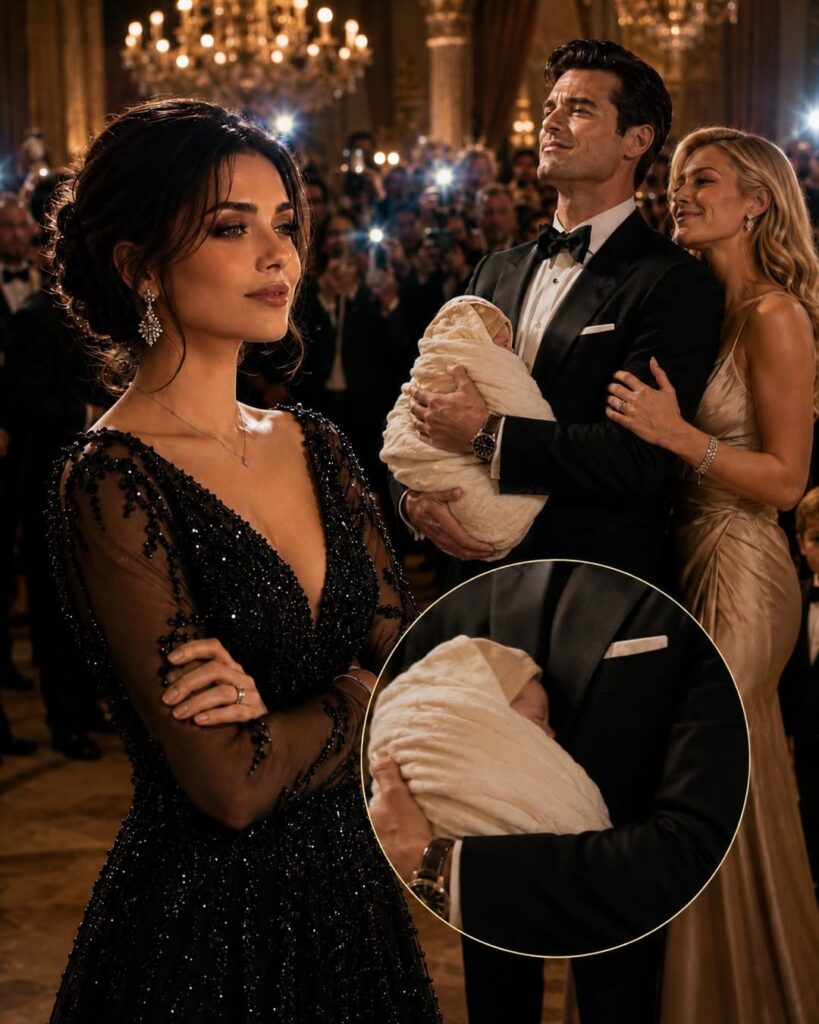
“Evelyn.”
“Clara texted me. She says she didn’t know.”
Martin’s head snapped toward me.
“What did Clara say?”
I smiled faintly.
“Now you care what women say?”
He reached for his phone.
Margot caught the movement.
“Don’t contact her.”
He looked at Margot as if she were beneath language.
“She is in my home.”
“She is with a child who may be evidence of multiple crimes.”
Patricia inhaled sharply.
“Careful.”
Margot turned to her.
“No. You be careful.”
For one glorious second, no one moved.
Then Patricia’s phone rang.
She looked at the screen.
And for the first time since I had known her, true alarm crossed her face.
Not irritation.
Not anger.
Alarm.
She rejected the call.
It rang again immediately.
Martin noticed.
“Mother?”
She rejected it again.
This time, a message appeared.
I was close enough to read the first line.
Security gate breached.
My heart slammed once against my ribs.
Patricia looked at me.
And in that look, I understood something before anyone said it.
Someone else was at Voss House.
Someone Patricia feared more than scandal.
More than lawyers.
More than me.
Martin grabbed her arm.
“What is happening?”
She pulled away.
“Nothing.”
But her voice had changed.
The queen had heard footsteps in the walls.
Margot saw it too.
“Evelyn,” she said quietly, “who knows where the originals are?”
I did not answer.
Martin looked at me.
His face changed again.
“What did you do?”
I thought of the originals.
The reports.
The emails.
The audit notes.
The bank transfers I had copied from foundation accounts.
The video from the gala.
And the letter I had written three months earlier to the only person Patricia Voss had spent thirty years erasing from the family history.
Not a journalist.
Not a judge.
Not a rival.
Someone worse.
A Voss.
My phone rang.
Unknown number.
I answered without speaking.
For a moment, there was only static.
Then a woman’s voice came through.
Older.
Low.
Amused.
“Evelyn, darling,” she said. “I’m standing in Patricia’s nursery.”
Patricia went white.
Martin stared at her.
The voice continued.
“And I think it is time everyone learned whose blood built this family.”
My hand tightened around the phone.
“Who are you?” I asked, though part of me already knew.
The woman laughed softly.
“Ask your husband why his father kept a second will.”
Patricia whispered one word.
“Vivienne.”
The name moved through the corridor like a match dropped into gasoline.
Margot’s face went still.
Martin looked from his mother to me.
For once, he was the one outside the locked room.
On the phone, Vivienne Voss said, “Come home, Evelyn. Bring your lawyer. Bring the doctor if he has courage. And hurry.”
A baby began crying in the background.
Not loudly.
Not desperately.
Just alive.
My heart broke open at the sound.
Then Vivienne added, almost pleasantly, “Because Clara is missing.”
…Si quieres saber qué sucede después, escribe ‘SÍ’ y ‘Me gusta’ para leer más.
